Website Speed & Performance Optimisation
A Faster Website Creates a Better Experience
Website speed is easy to ignore until it starts affecting the people actually using the site. Pages take too long to appear, images load slowly, layouts move around, or the mobile experience feels noticeably heavier than it should.

Performance Matters Beyond a PageSpeed Score
A performance score can be useful, but it does not tell the whole story.
What matters more is how the website behaves for an actual visitor. How quickly does useful content appear? Can someone interact with the page without waiting? Does the layout remain stable while it loads? Is the experience still good on a mobile connection?
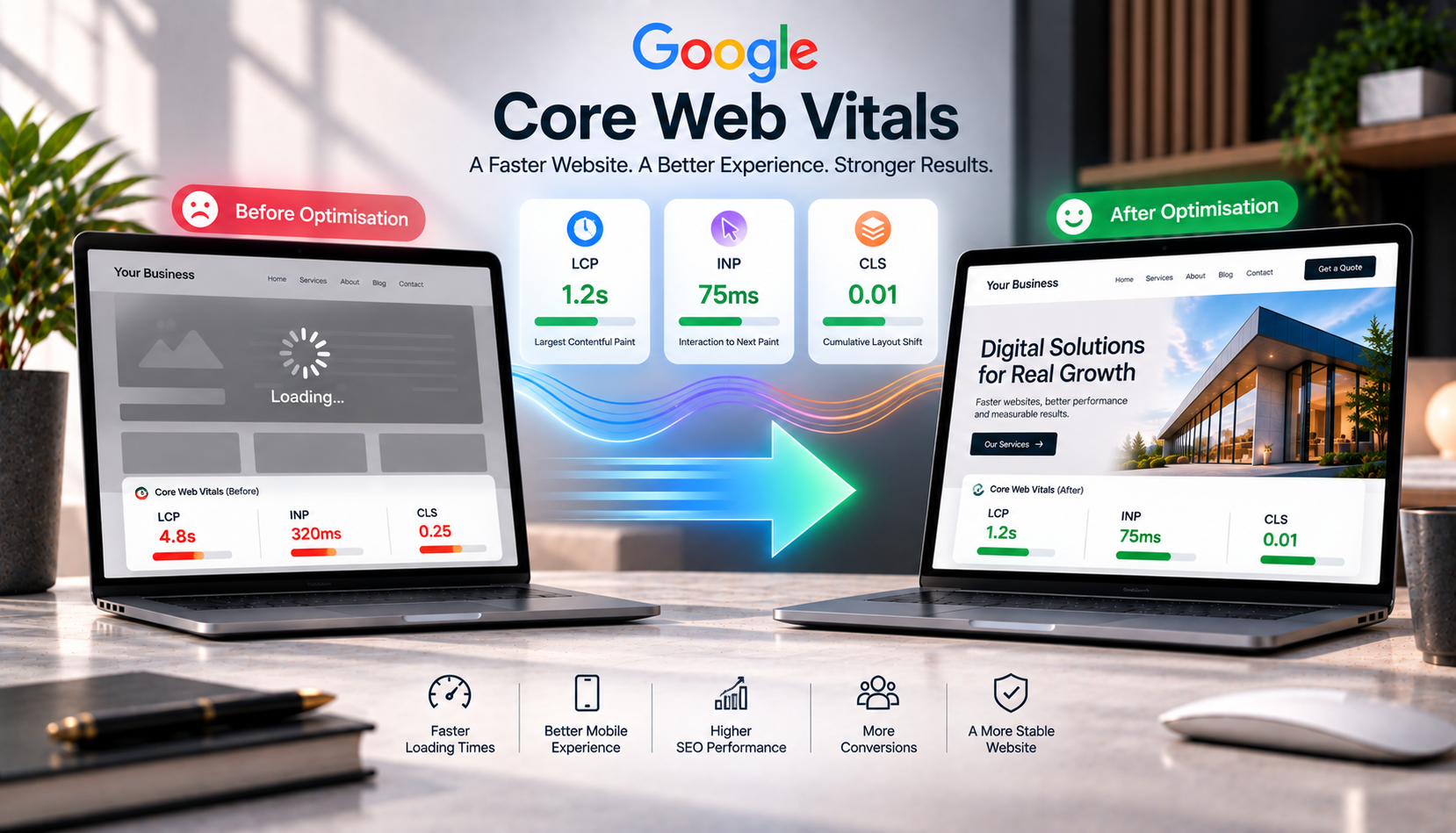
Website performance can also affect other areas of your digital activity. Search engines consider page experience and Core Web Vitals, while paid advertising becomes less effective if users click an advert only to arrive on a slow website.
For e-commerce websites, performance becomes even more important. Product pages, category pages, search, baskets and checkout all form part of the buying journey. A slow or unreliable experience introduces friction exactly where you do not want it.
What We Look at When Optimising Website Performance
Performance problems can come from several parts of a website at the same time. We first identify where the bottlenecks are and then work through the areas where improvements will have a meaningful effect.
Depending on the website, optimisation can include:
- Core Web Vitals
- Image optimisation
- Caching and content delivery
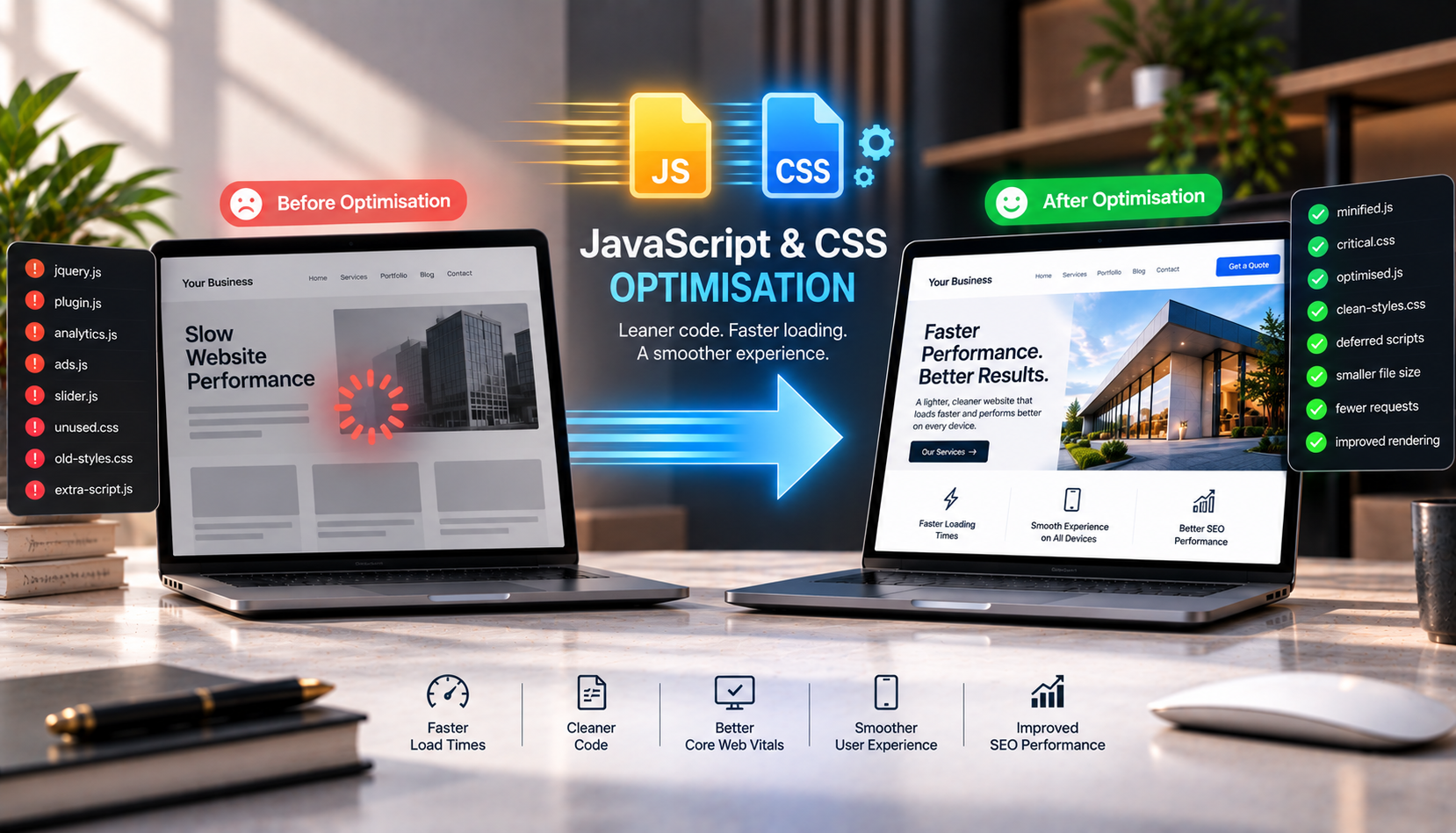
- JavaScript and CSS optimisation
- Database optimisation
- Server and hosting performance
- Third-party scripts and tracking
- Mobile performance
Is Your Website Slower Than It Should Be?
If your website feels slow, performs poorly on mobile, has weak Core Web Vitals or regularly receives low performance scores, the first step is finding out what is actually causing the problem.
We can review the current setup, identify the main performance issues and determine which improvements are worth making. The aim is not simply to chase a perfect score, but to create a faster and more reliable website for the people actually using it.
FREQUENTLY ASKED QUESTIONS
Why is my website loading slowly?
A slow website can be caused by several issues, including large images, excessive plugins, poorly optimised code, third-party scripts, database problems, weak hosting or incorrect caching. In many cases, there is no single cause. We review the website as a whole to identify the main performance bottlenecks before deciding what needs to be optimised.
Does website speed affect SEO?
Website performance can contribute to search visibility and user experience. Google uses Core Web Vitals as part of its page experience signals, but website speed is only one part of SEO and improving a performance score alone does not guarantee higher rankings. The main objective should be a fast, stable and usable website alongside a wider SEO strategy.
Can you improve my Google PageSpeed Insights and Core Web Vitals scores?
Yes. We can investigate issues affecting PageSpeed Insights and Core Web Vitals, including LCP, INP and CLS. The improvements available depend on the website, platform, hosting environment and third-party functionality being used. We focus on meaningful performance improvements rather than promising an arbitrary score that may not reflect how the website actually performs for visitors.
Can you speed up an existing WordPress or WooCommerce website?
Yes. WordPress and WooCommerce websites can often be improved without rebuilding the entire site. This may involve reviewing plugins, themes, images, caching, databases, scripts, hosting and other technical elements. For WooCommerce websites, we also consider performance across product pages, categories, baskets and checkout.
Will website speed optimisation change the design or functionality of my website?
Not necessarily. Most performance work happens behind the scenes and is intended to improve how efficiently the existing website operates. If a particular plugin, script or design element is creating a significant performance problem, we will identify it and consider the available alternatives before making changes that could affect functionality or the appearance of the website.