Website Maintenance & Support
Your Website Still Needs Attention After It Goes Live
Launching a website is not the end of the work. Platforms change, plugins and integrations are updated, security issues appear, content needs to change and occasionally something simply stops working as expected.
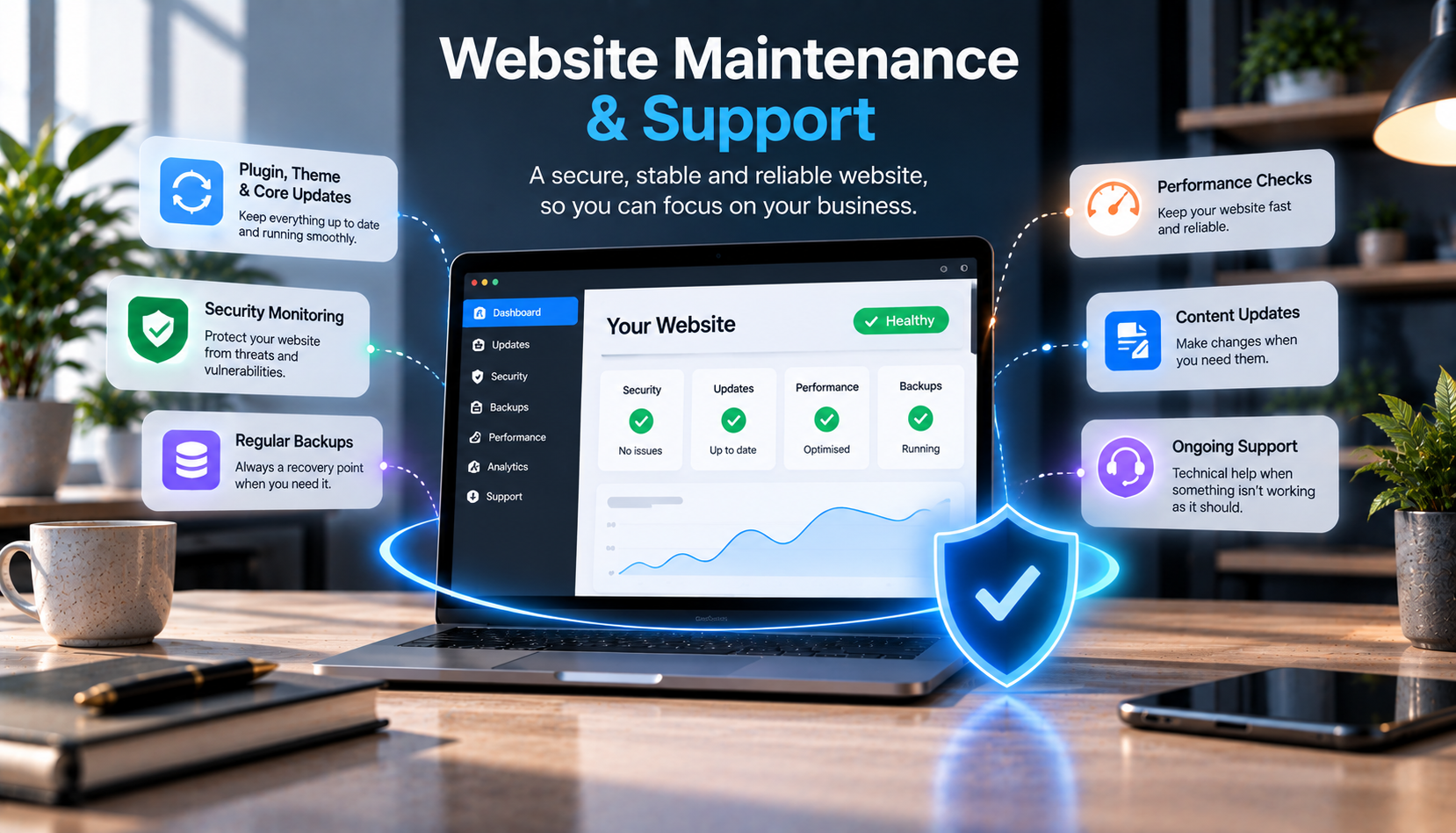
Maintenance Is About Keeping the Website Reliable
Website maintenance is sometimes treated as simply installing updates once a month. In practice, there is more to consider.
An update can affect another plugin or integration. A website that worked perfectly six months ago may gradually become slower. Forms and tracking can stop working without producing an obvious error. Security vulnerabilities can appear in software that was previously considered safe.
For e-commerce businesses, the consequences can be more significant. Problems with product pages, payment methods, checkout or integrations can directly interfere with sales.
We approach maintenance as ongoing technical management rather than a checklist of updates. The objective is to keep the website stable, secure and functioning properly while giving the business somewhere to turn when technical support is needed.
What Website Maintenance & Support Can Include
The level of support depends on the website, platform and how actively it is being used. A company website has different maintenance requirements from a busy e-commerce store with multiple integrations.
Depending on your setup, our website maintenance and support can include:
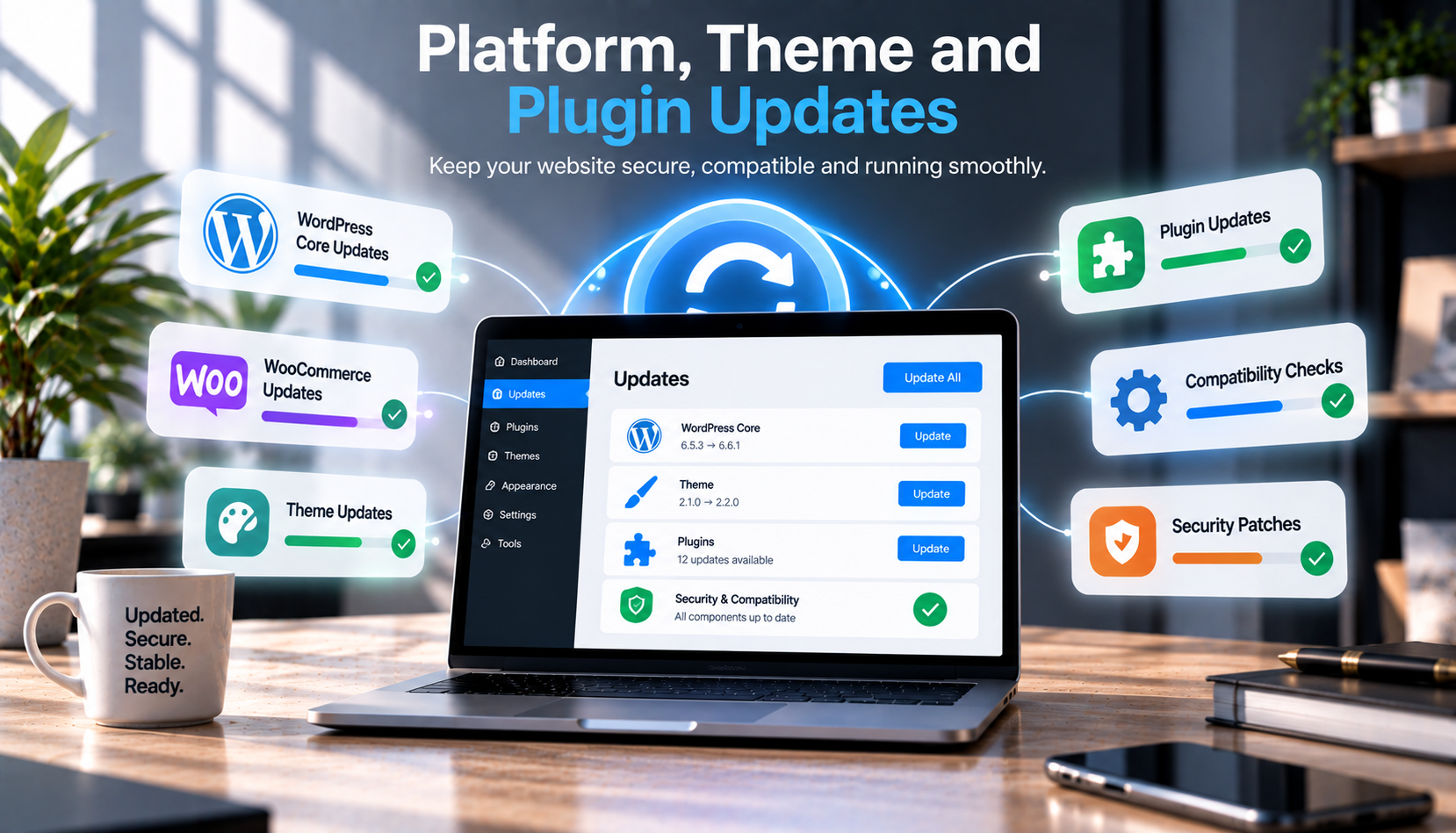
- Platform, theme and plugin updates
- Website backups
- Security monitoring and maintenance
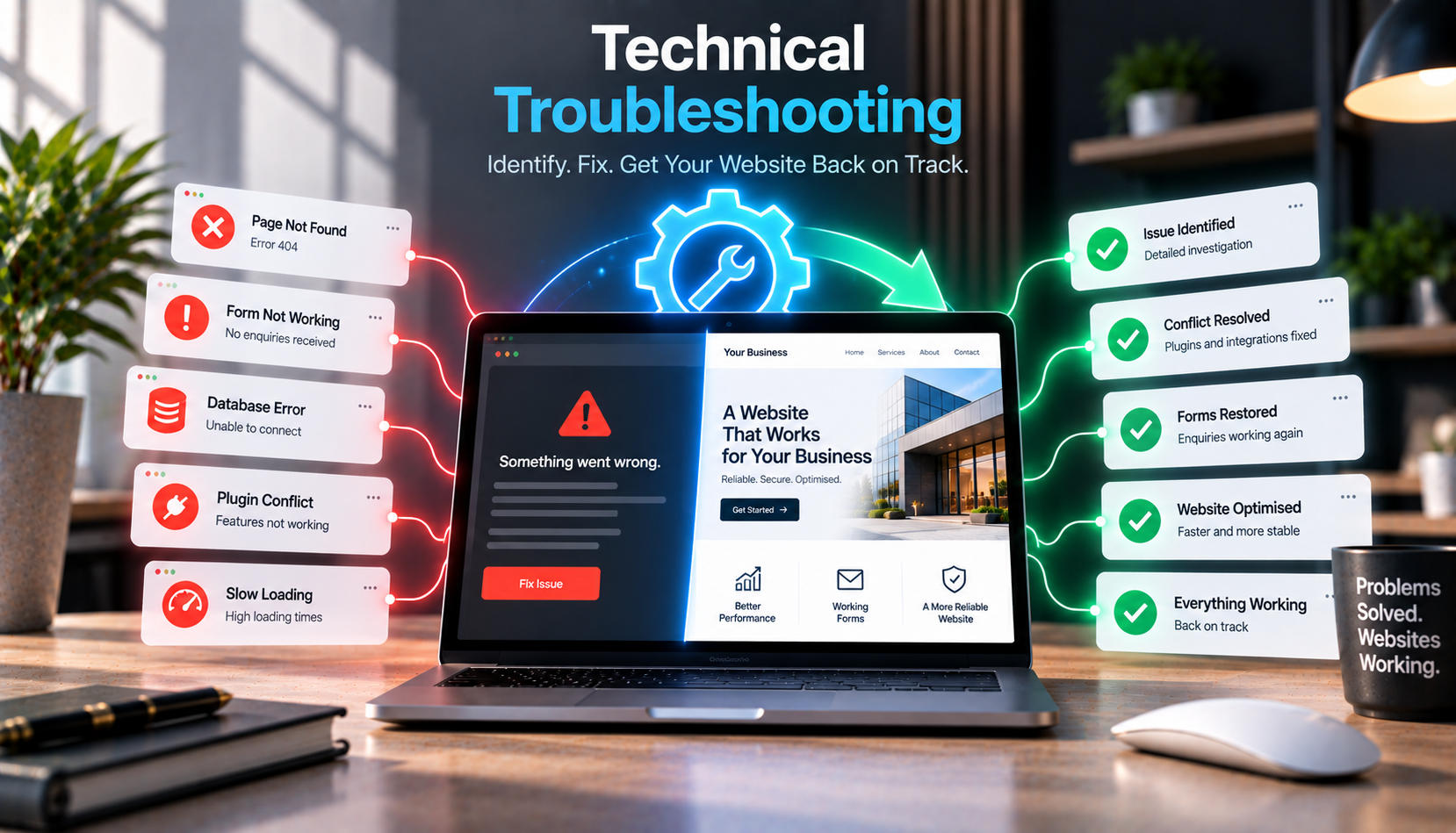
- Technical troubleshooting
- E-commerce support
- Ongoing technical support
- Database performance
Need Someone to Look After Your Website?
If your website is important to the day-to-day operation of your business, leaving maintenance until something breaks can create unnecessary problems.
Whether we developed the website or you already have an existing setup, we can review its current condition and determine what level of maintenance and technical support makes sense.
The aim is simple: keep the website working properly, deal with technical issues when they appear, and give your team a reliable point of contact when something needs attention.
FREQUENTLY ASKED QUESTIONS
What does website maintenance and support include?
Website maintenance can include software updates, backups, security checks, performance monitoring, technical troubleshooting and smaller content changes. The exact level of support depends on the platform and complexity of the website. We can also investigate problems with forms, integrations, tracking and other functionality when something is no longer working as expected.
How often should a website be maintained?
Most business websites should be checked regularly rather than only when something breaks. Platforms, plugins, themes and integrations change over time, and security updates may need attention as they become available. The appropriate maintenance schedule depends on the website itself, with active e-commerce websites generally requiring more attention than smaller informational websites.
Do you provide WordPress and WooCommerce maintenance?
Yes. We provide ongoing maintenance and technical support for WordPress and WooCommerce websites. This can include WordPress core updates, theme and plugin updates, backups, security checks, performance improvements and troubleshooting. For WooCommerce stores, we can also help investigate problems affecting products, baskets, checkout and other e-commerce functionality.
Can you maintain a website that you did not build?
Yes. We can take over the maintenance of an existing website even if it was originally developed by another agency or developer. Before ongoing support begins, we normally review the website, hosting environment, software and existing setup so we understand its current condition and identify any issues that may already need attention.
What happens if something breaks on my website?
If a technical problem appears, we can investigate the cause and determine the appropriate fix. Depending on the issue, this might involve a plugin conflict, failed update, hosting problem, integration error or something within the website itself. Having ongoing website support means you already have someone familiar with the technical setup rather than needing to search for a developer after a problem has occurred.