Shopify Website Development
Stores Built Around How Your Business Sells
Shopify makes it relatively easy to start selling online. Building a store that works properly for the business behind it requires a little more thought.
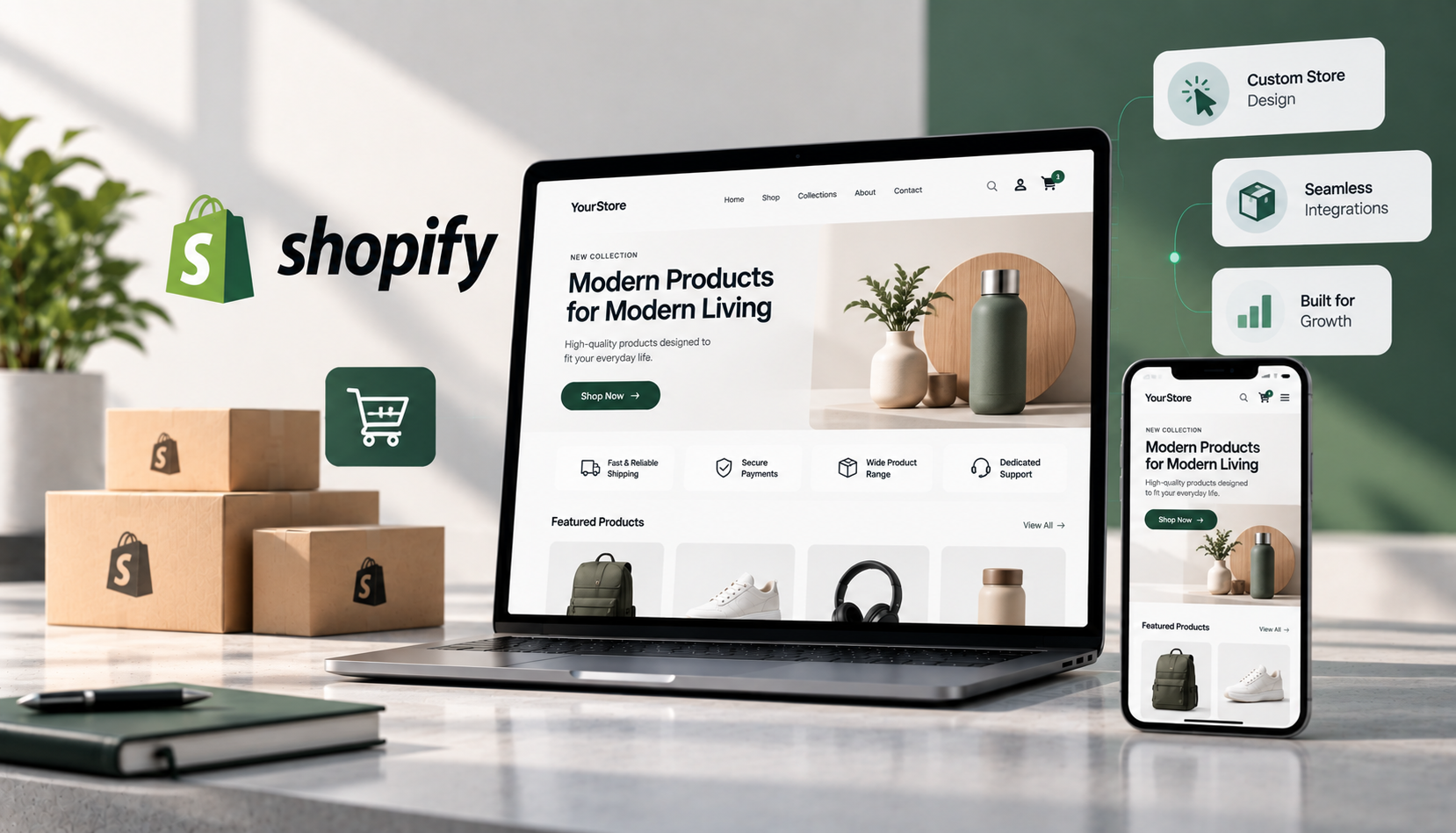
A Store Should Be Easy to Buy From and Easy to Manage
The customer only experiences one side of your Shopify store. They browse products, compare options, add something to their basket and complete their purchase.
Behind that journey is everything your business needs to manage afterwards: products, stock, payments, orders, shipping, customer information, discounts, returns and reporting.
We consider both sides when developing a Shopify website.
The storefront needs to feel clear and consistent with your brand, while the administration side needs to remain practical for the people using it every day. Where additional functionality is required, we can also look at Shopify apps, third-party integrations or custom development rather than filling the store with unnecessary applications.
What We Consider When Building Your Shopify Website
Every Shopify project has different requirements. Some businesses need a relatively straightforward store with a focused product range, while others need large catalogues, multiple markets, product variations, integrations and more complex purchasing journeys.
Our Shopify development process can include:
- Store structure and product organisation
- Responsive Shopify development
- Shopify theme development and customisation
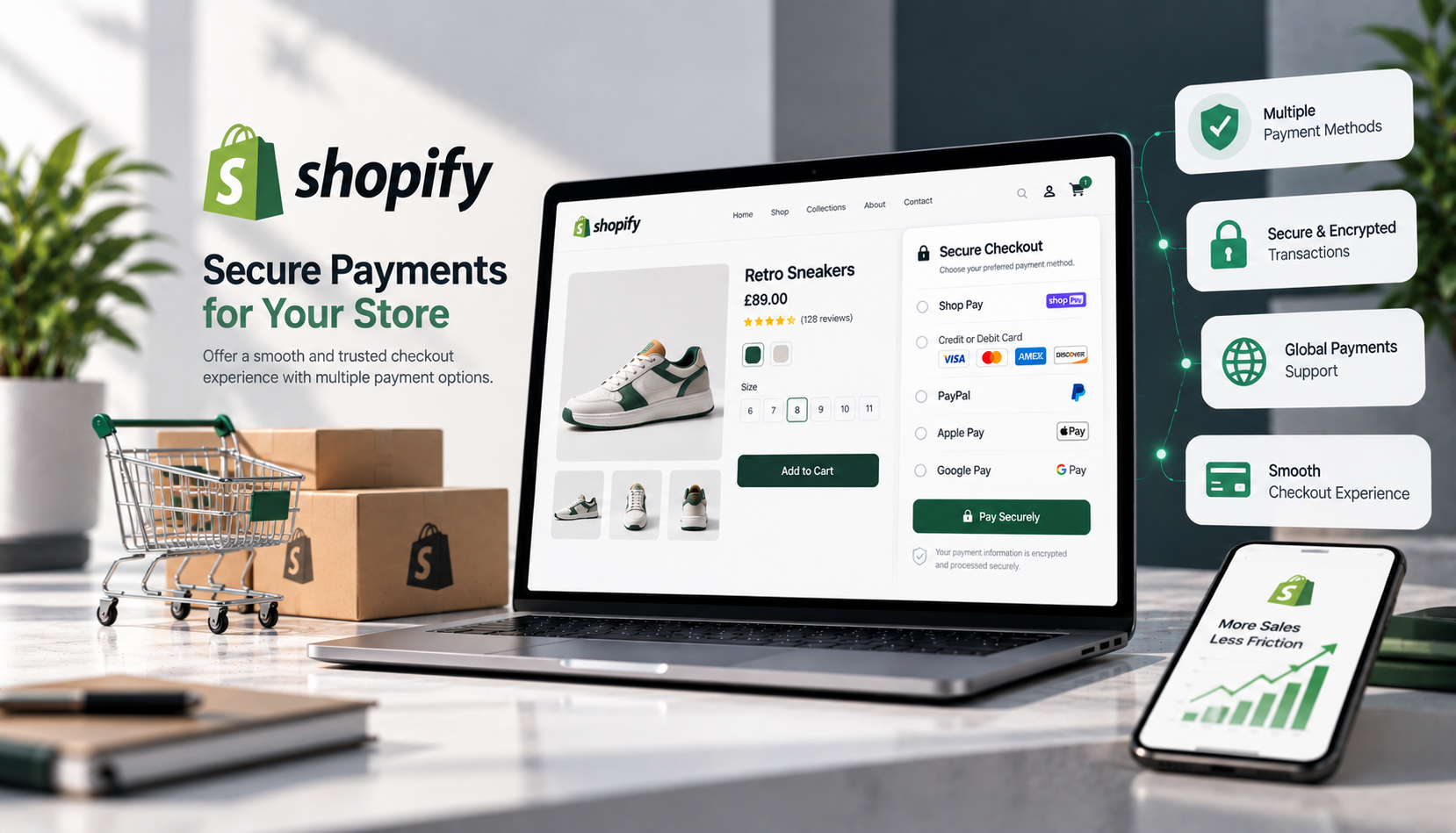
- Payments and checkout
- Shipping and fulfilment
- Shopify SEO foundations
- Analytics and e-commerce tracking
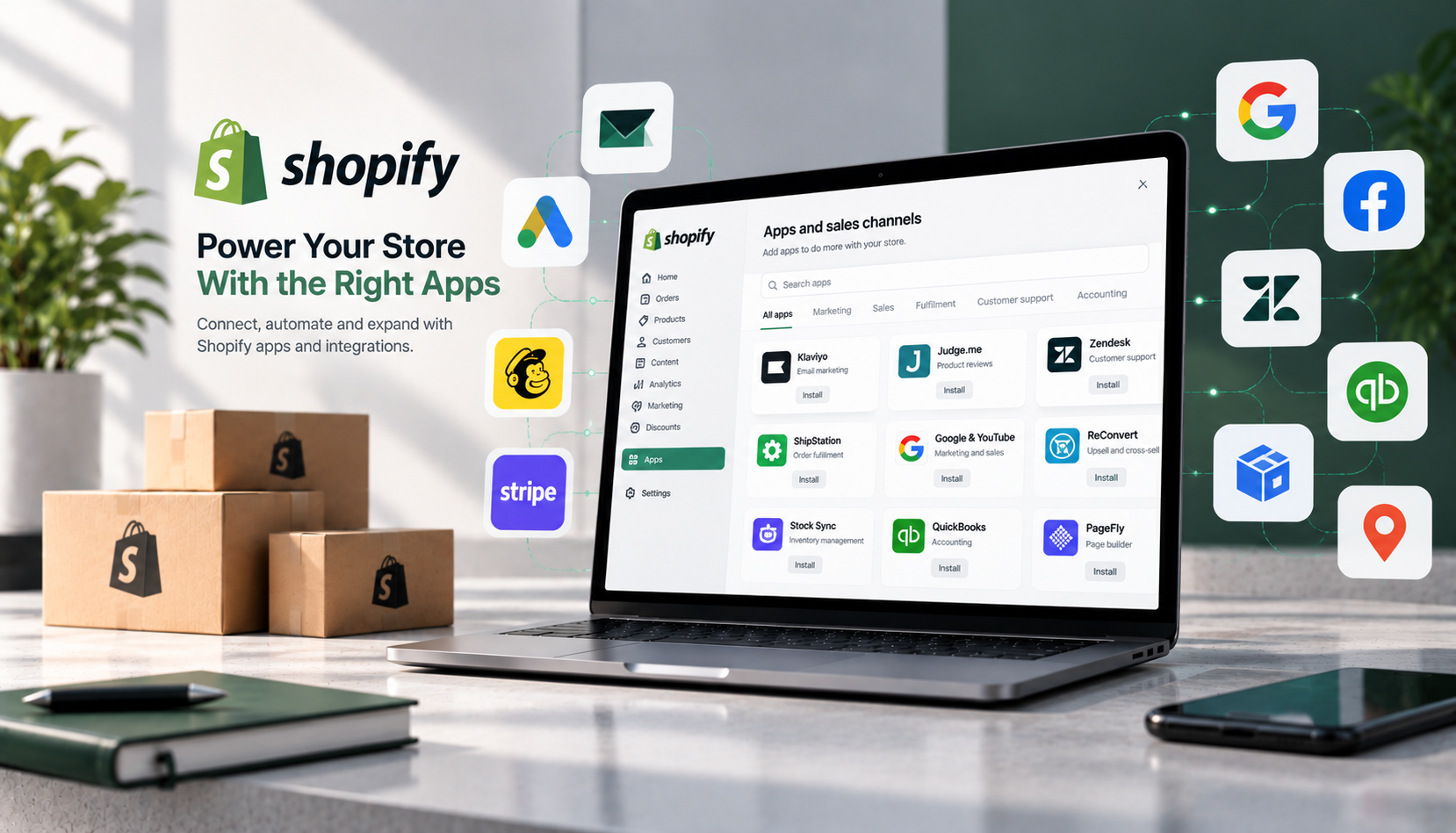
- Apps and third-party integrations
Planning a Shopify Website?
If you are starting a new Shopify store, considering a redesign, or moving an existing e-commerce business onto Shopify, the first step is understanding what the platform needs to do for your business.
We can review your products, current setup, customer journey and any systems that need to connect with the store. From there, we can define a practical Shopify development approach and determine what should be built, configured or integrated — without making the store more complicated than it needs to be.
FREQUENTLY ASKED QUESTIONS
How much does Shopify website development cost?
The cost of Shopify website development depends on the size of the store, design requirements, number of products, required functionality and any third-party integrations. A straightforward Shopify store using a customised theme will have different requirements from a larger e-commerce website with multiple markets, custom functionality or complex integrations. We scope each Shopify project around what the business actually needs.
How long does it take to build a Shopify website?
Most Shopify website development projects take several weeks from initial planning through to launch. The exact timeframe depends on the size of the product catalogue, design requirements, content, integrations and whether products or customer data need to be migrated from another platform. We establish the project structure and expected timeline before development begins.
Is Shopify good for SEO?
Yes. Shopify provides a solid foundation for SEO when the store is structured and configured properly. Product and collection pages, metadata, headings, internal linking, website performance and content can all contribute to organic search visibility. We consider these elements during Shopify development so the store is technically prepared for ongoing SEO work after launch.
Can you migrate my existing online store to Shopify?
Yes. We can help migrate an existing e-commerce website to Shopify, including products, collections, images and other relevant store data where possible. The migration process depends on your current platform and how the existing store is structured. We review the website first to determine what should be transferred directly and what would benefit from being reorganised during the move.
Can Shopify integrate with other business and marketing tools?
Yes. Shopify can connect with a wide range of payment providers, shipping services, email marketing platforms, CRM systems, inventory tools, accounting software, advertising platforms and other third-party services. We assess which integrations are actually useful for your operation and configure the store accordingly, rather than adding applications that create unnecessary complexity.