Amazon Ads Management
Advertising Built Around How People Shop on Amazon
Amazon advertising puts your products in front of customers who are already browsing, comparing options and, in many cases, actively looking to make a purchase.
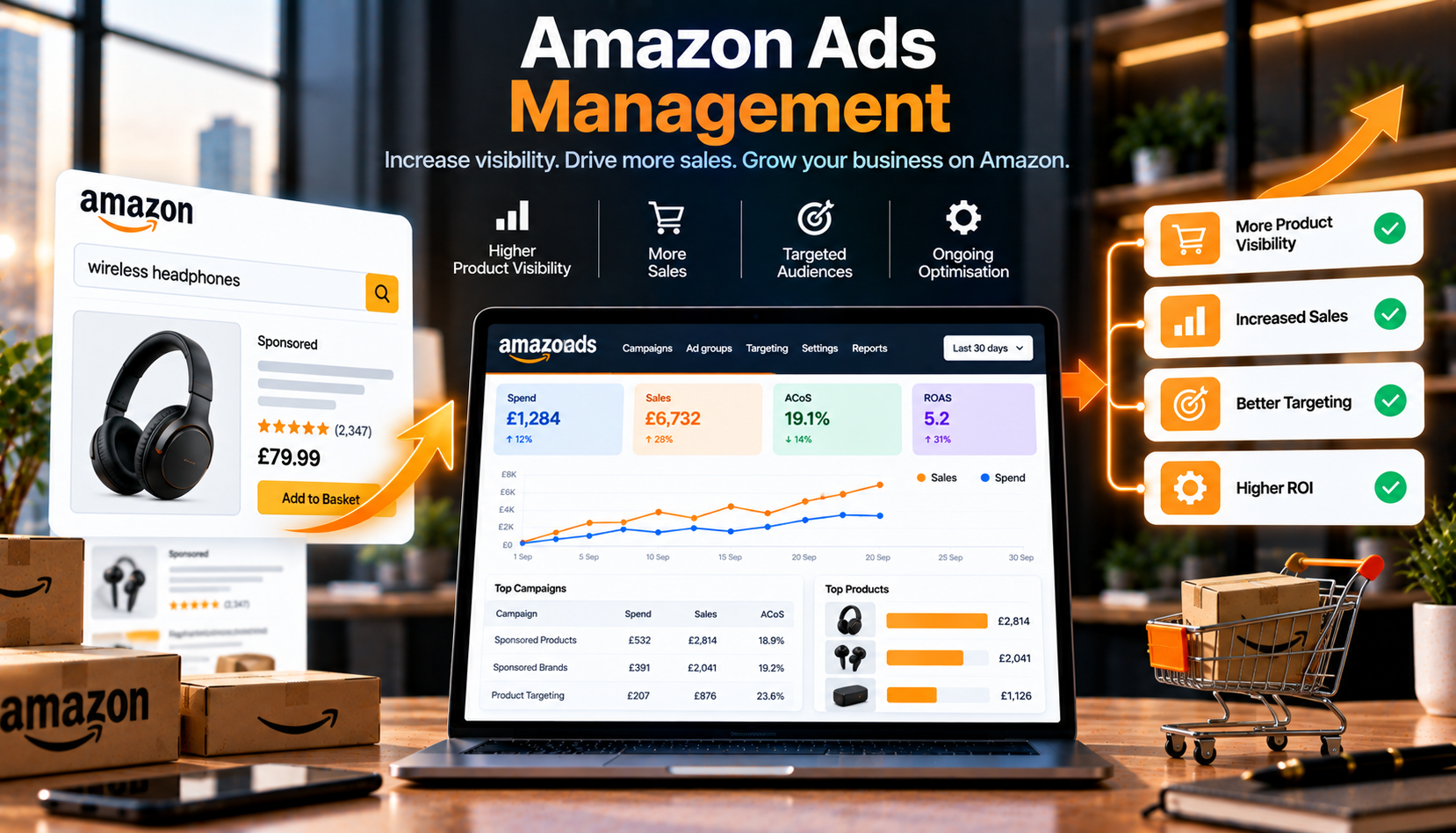
More Sales Do Not Automatically Mean Better Advertising
Amazon provides sellers with several ways to promote products, but advertising performance needs to be considered alongside margins, pricing, competition and organic sales.
A campaign can generate revenue and still be inefficient if too much of that revenue is being consumed by advertising costs.
That is why we look at metrics such as advertising spend, attributed sales, ACoS and ROAS alongside the actual products being promoted. We also review search terms, targeting and campaign structure to understand where budget is being used effectively and where unnecessary spend may be occurring.
As more data becomes available, campaigns can be refined around the products and searches demonstrating stronger commercial potential.

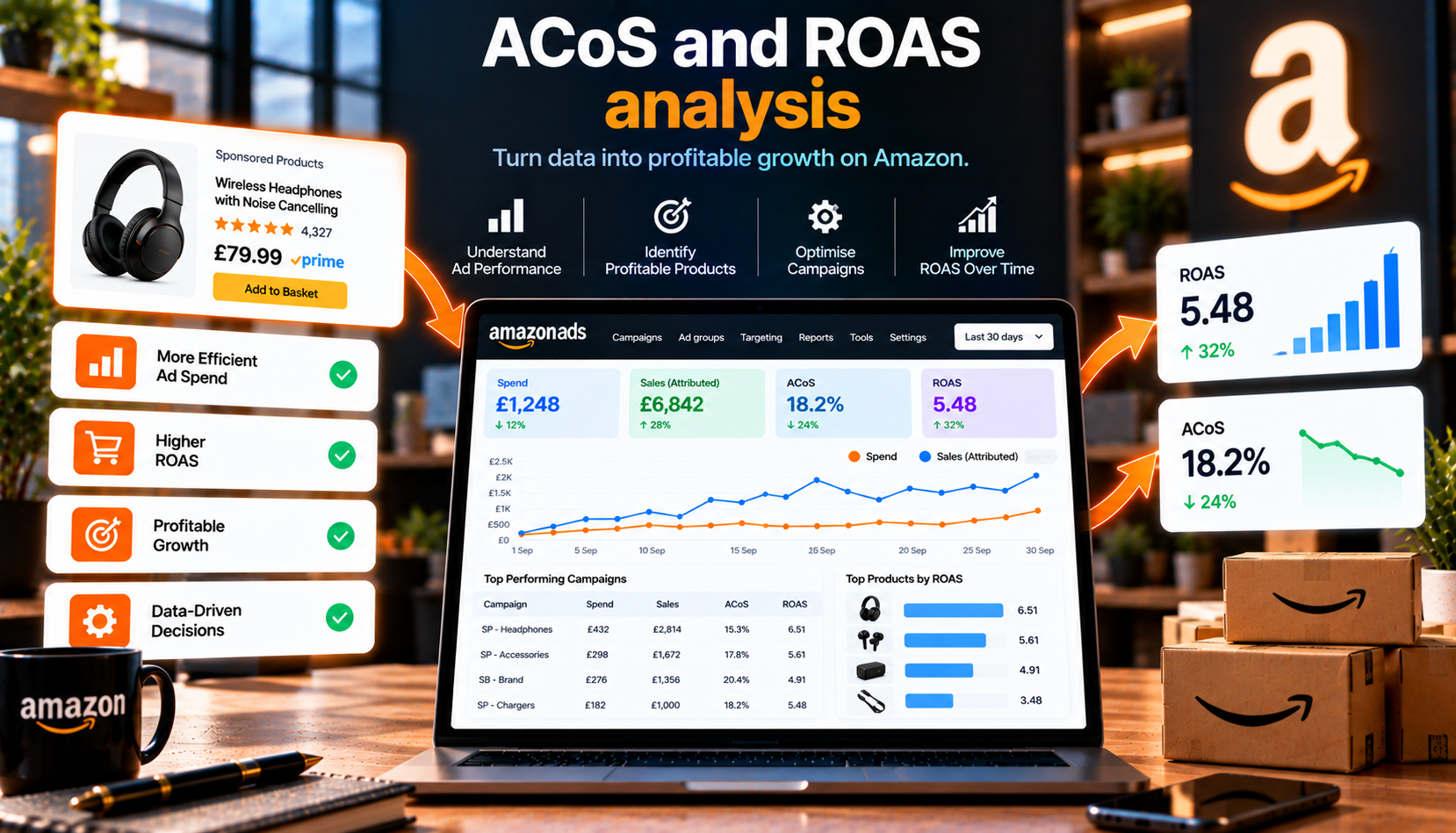
What We Focus on When Managing Amazon Ads
Amazon advertising accounts can become complicated quickly, particularly when a seller has a large catalogue or several products competing within similar categories.
Depending on the account and available advertising options, our Amazon Ads management can include:
- Amazon Ads account structure
- Sponsored Products campaigns
- Sponsored Brands campaigns
- Keyword and search term research
- Product targeting
- ACoS and ROAS analysis
- Ongoing optimisation and reporting
Already Running Amazon Ads?
If you already have Amazon advertising campaigns running, we can start by reviewing the existing account rather than automatically rebuilding everything.
We look at campaign structure, targeting, search terms, budgets, bids, advertising costs and historical sales performance to understand how the account has been operating.
From there, we can identify where budget may be inefficient, which products and searches are performing more strongly and where further testing could be useful.
The aim is to make Amazon advertising easier to understand and manage, with decisions based on the relationship between advertising spend and the sales it is helping to generate.
FREQUENTLY ASKED QUESTIONS
How much does Amazon Ads management cost?
The cost of Amazon Ads management depends on the size of your product catalogue, number of campaigns, advertising markets and the level of ongoing optimisation required. Our management fee is separate from the advertising budget paid through Amazon. Before starting, we review the account and your objectives so the expected management requirements and advertising costs are clear.
How much should I spend on Amazon Ads?
There is no fixed Amazon advertising budget that works for every seller. The appropriate budget depends on factors such as product margins, average selling price, competition, sales volume and the number of products being promoted. We consider these factors alongside existing account data to determine how advertising budget can be allocated across the catalogue.
What is ACoS in Amazon advertising?
ACoS, or Advertising Cost of Sales, compares your Amazon advertising spend with the sales attributed to those ads. For example, if £20 is spent on advertising and it generates £100 in attributed sales, the ACoS would be 20%. A good ACoS is not the same for every business because product margins, operating costs and advertising objectives vary considerably.
What types of Amazon Ads can you manage?
Depending on your account, marketplace and eligibility, we can manage advertising formats such as Sponsored Products and Sponsored Brands, alongside keyword, product and other available targeting options. The campaign mix is determined by your catalogue, objectives and the advertising features available to the account rather than using every format simply because it exists.
Can you take over my existing Amazon advertising campaigns?
Yes. We can review and manage an existing Amazon Ads account without automatically starting again. We look at campaign structure, search terms, targeting, bids, budgets, ACoS, ROAS and historical performance to understand what is already working. From there, we can identify campaigns worth keeping, areas that need improvement and opportunities for further testing.